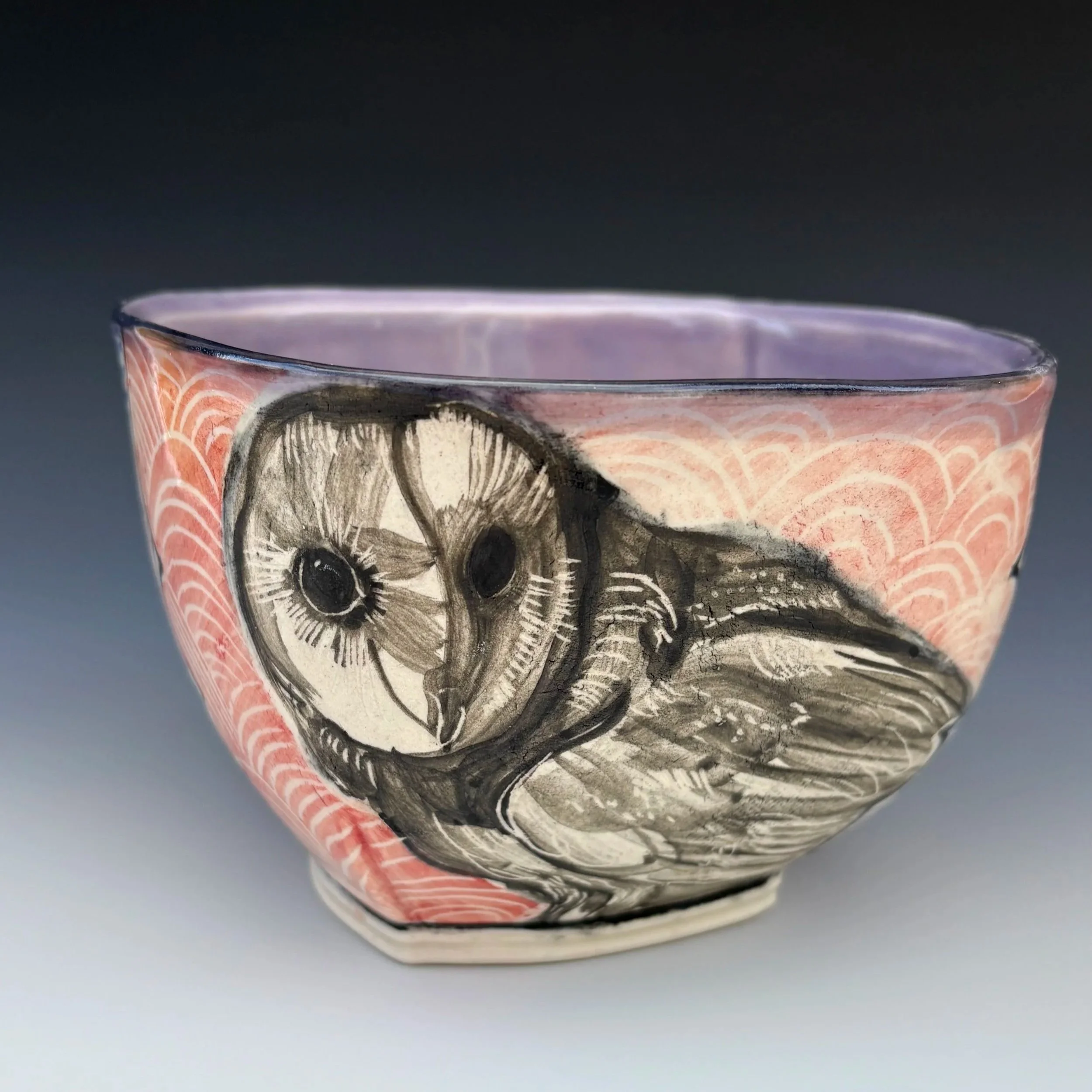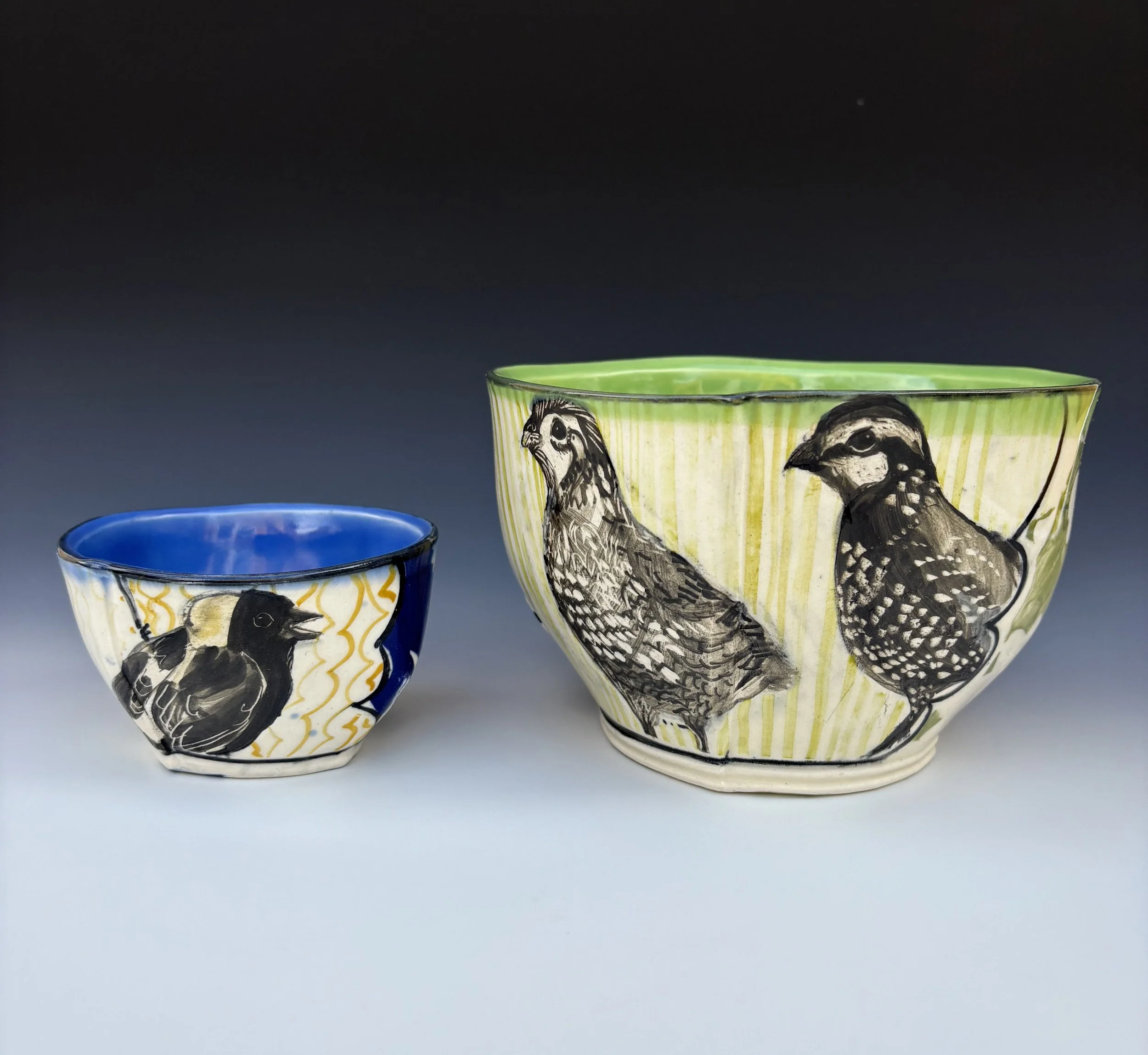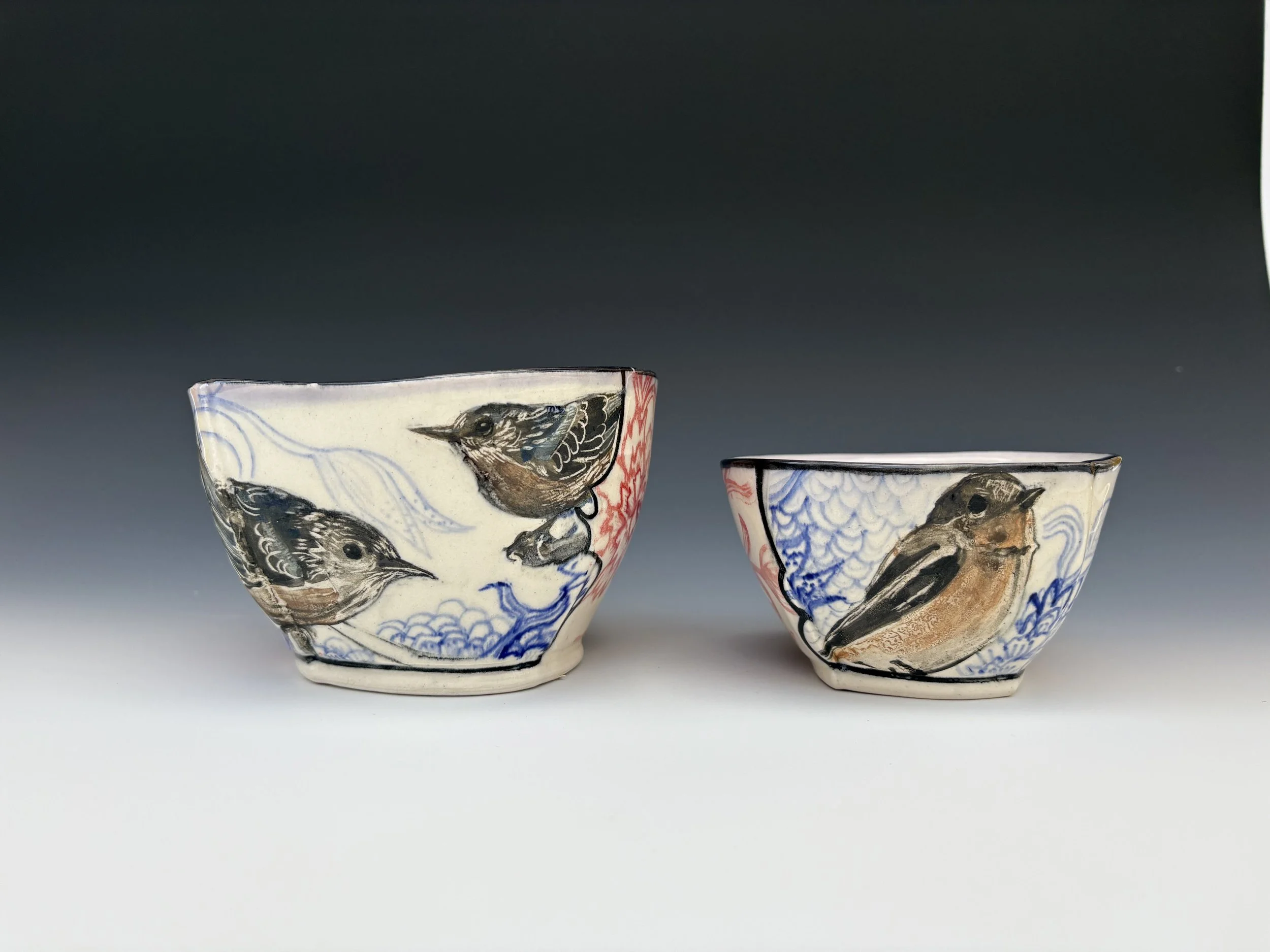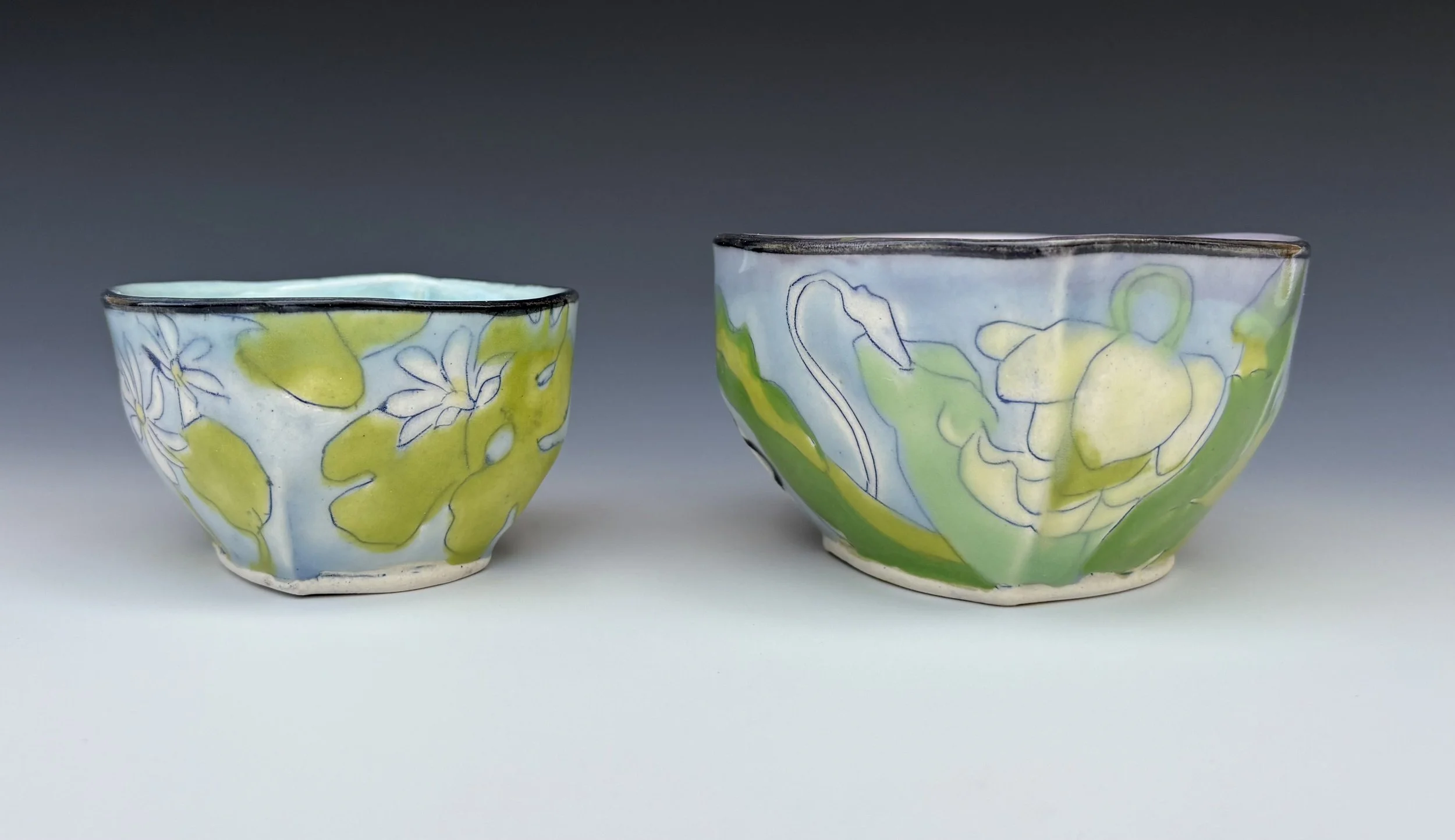
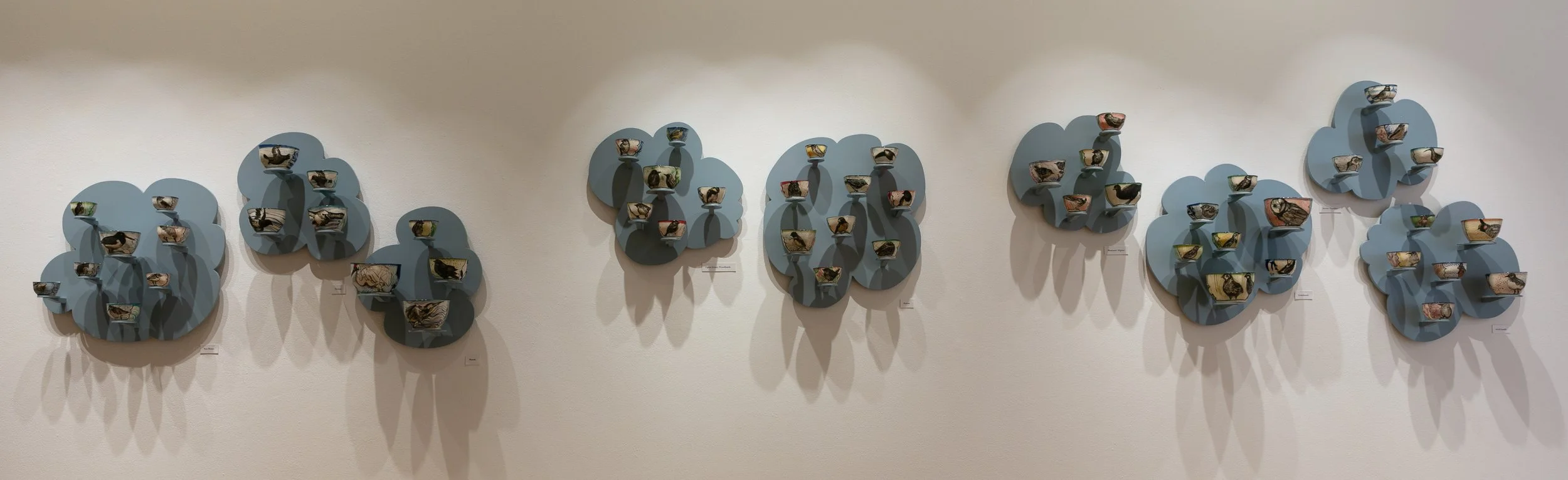
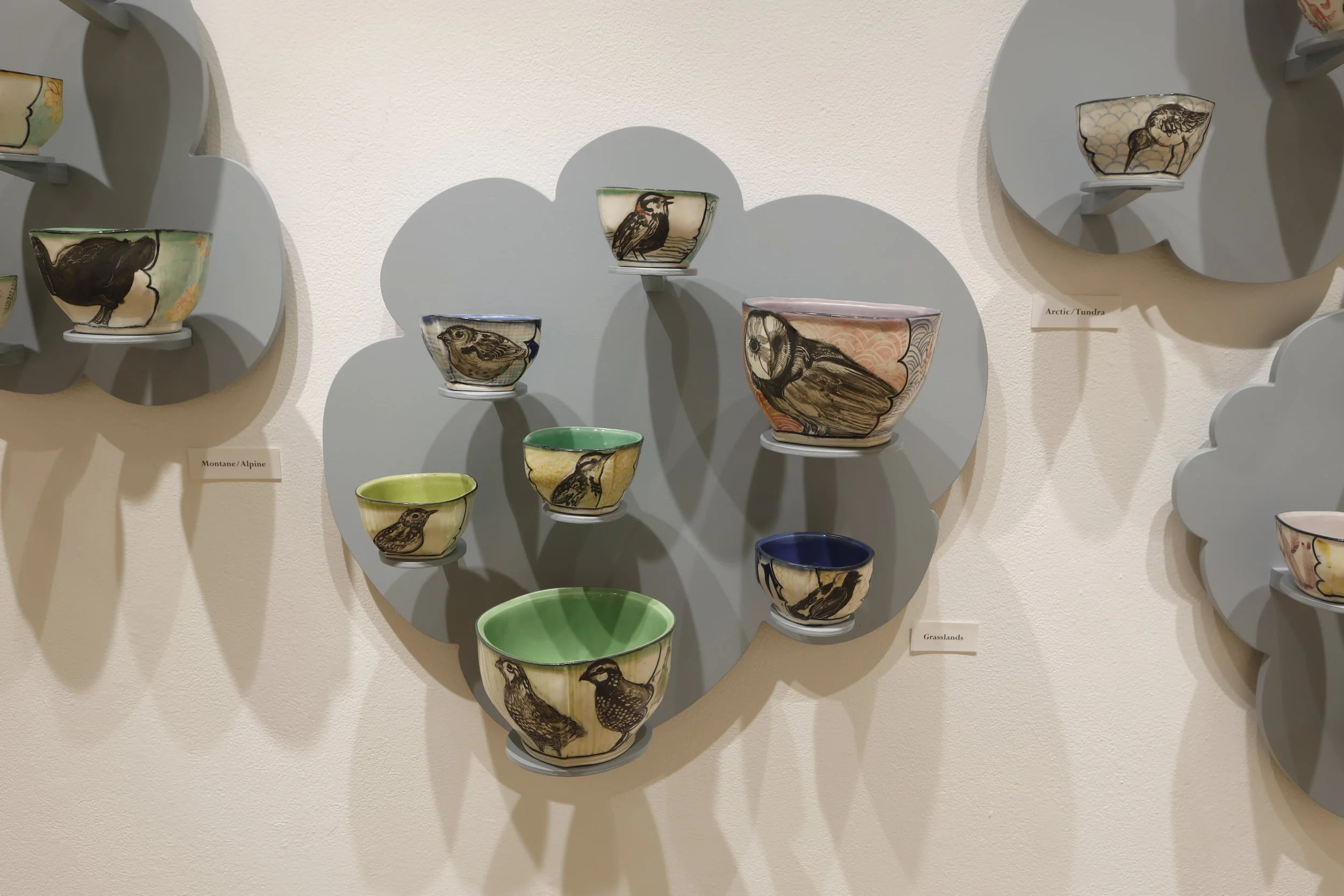
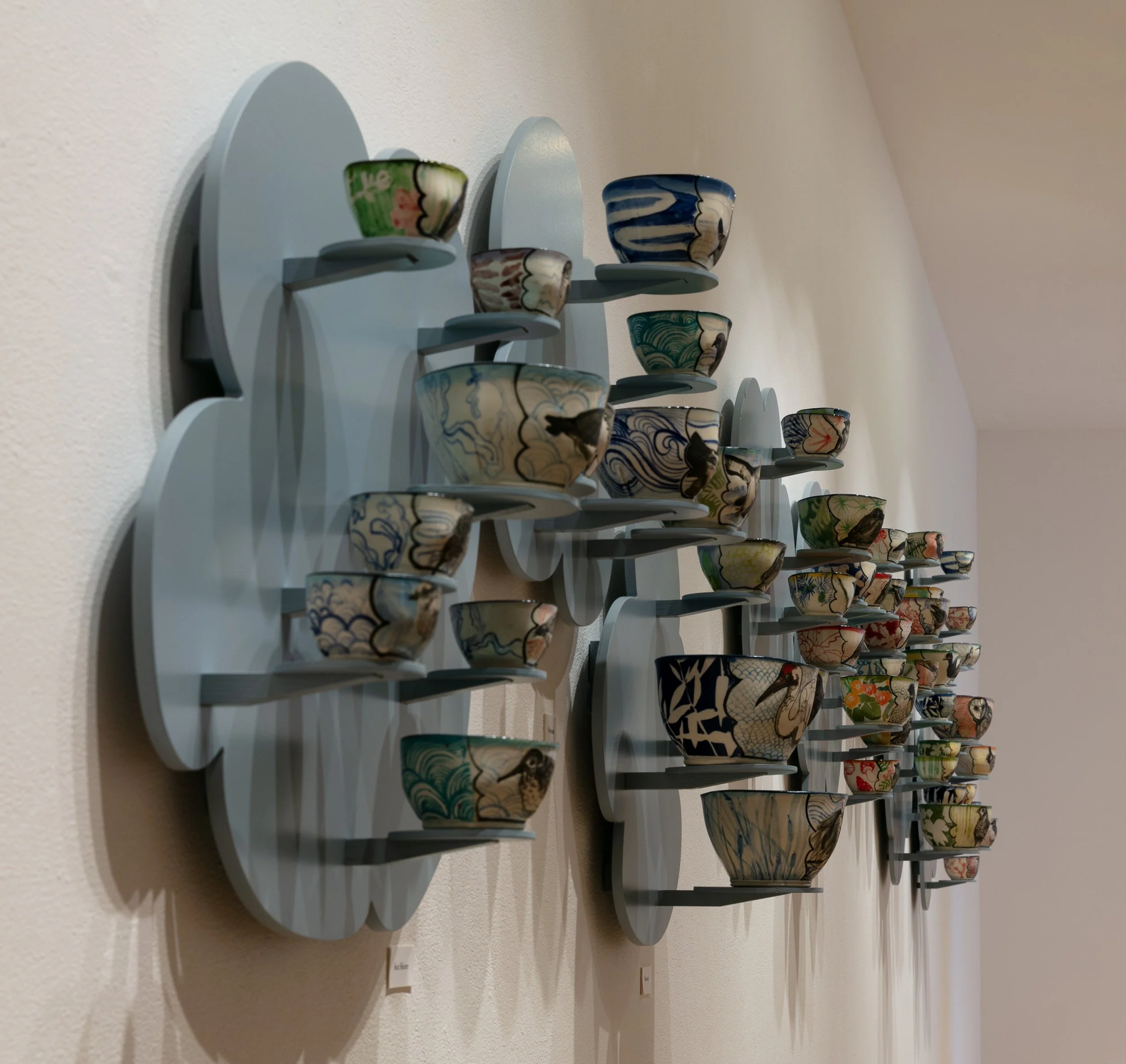
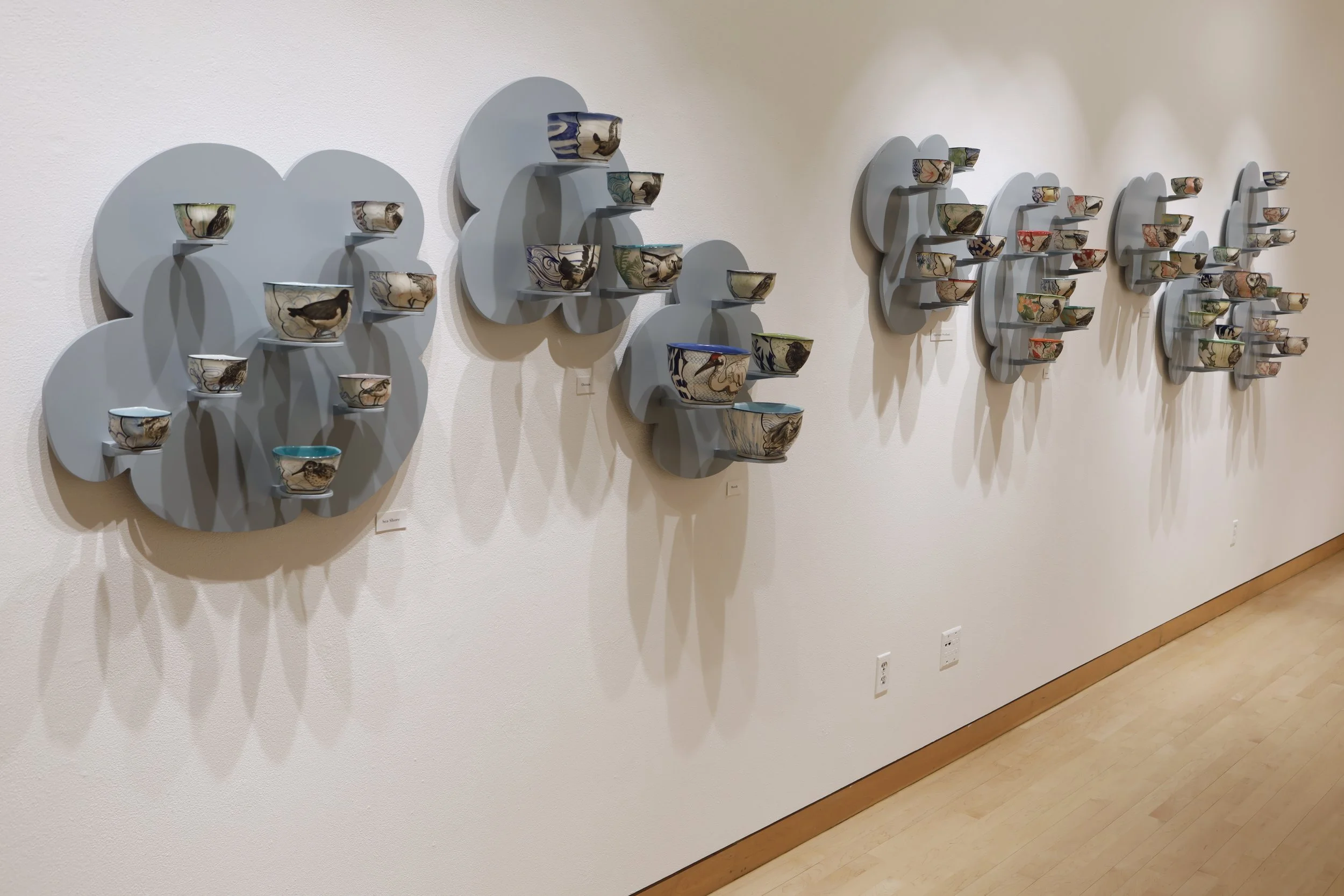
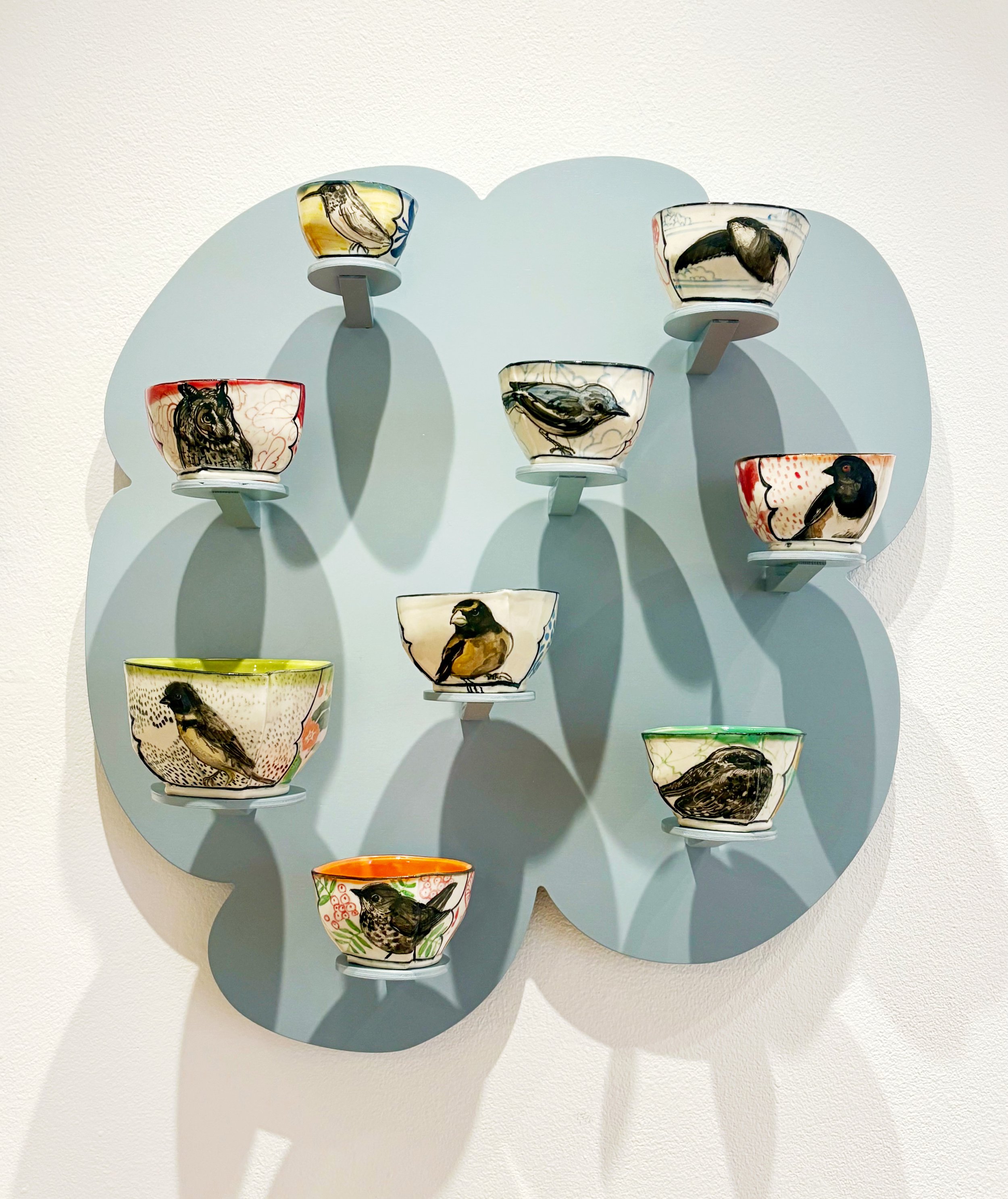
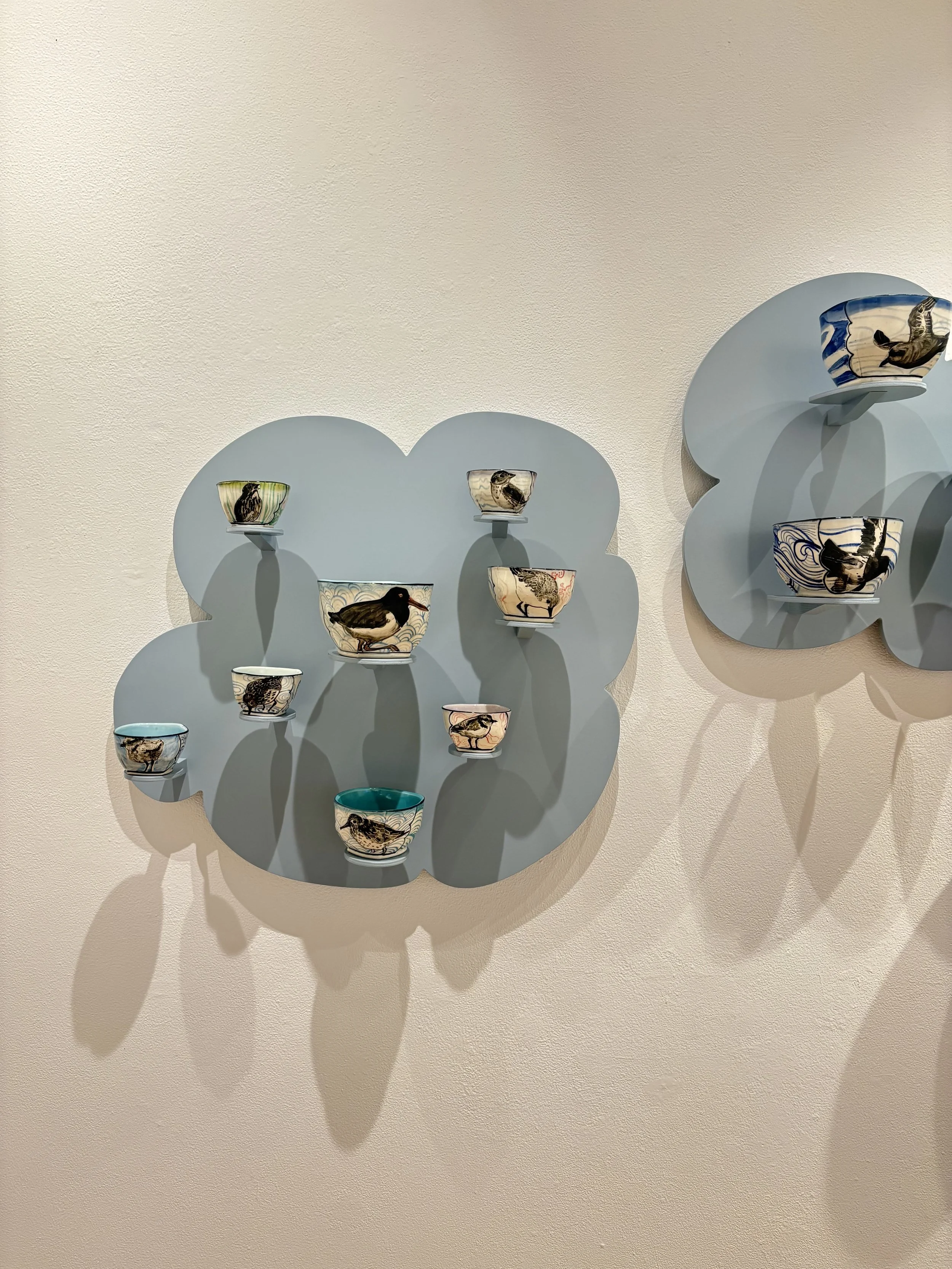
Cloud—Bird—Place
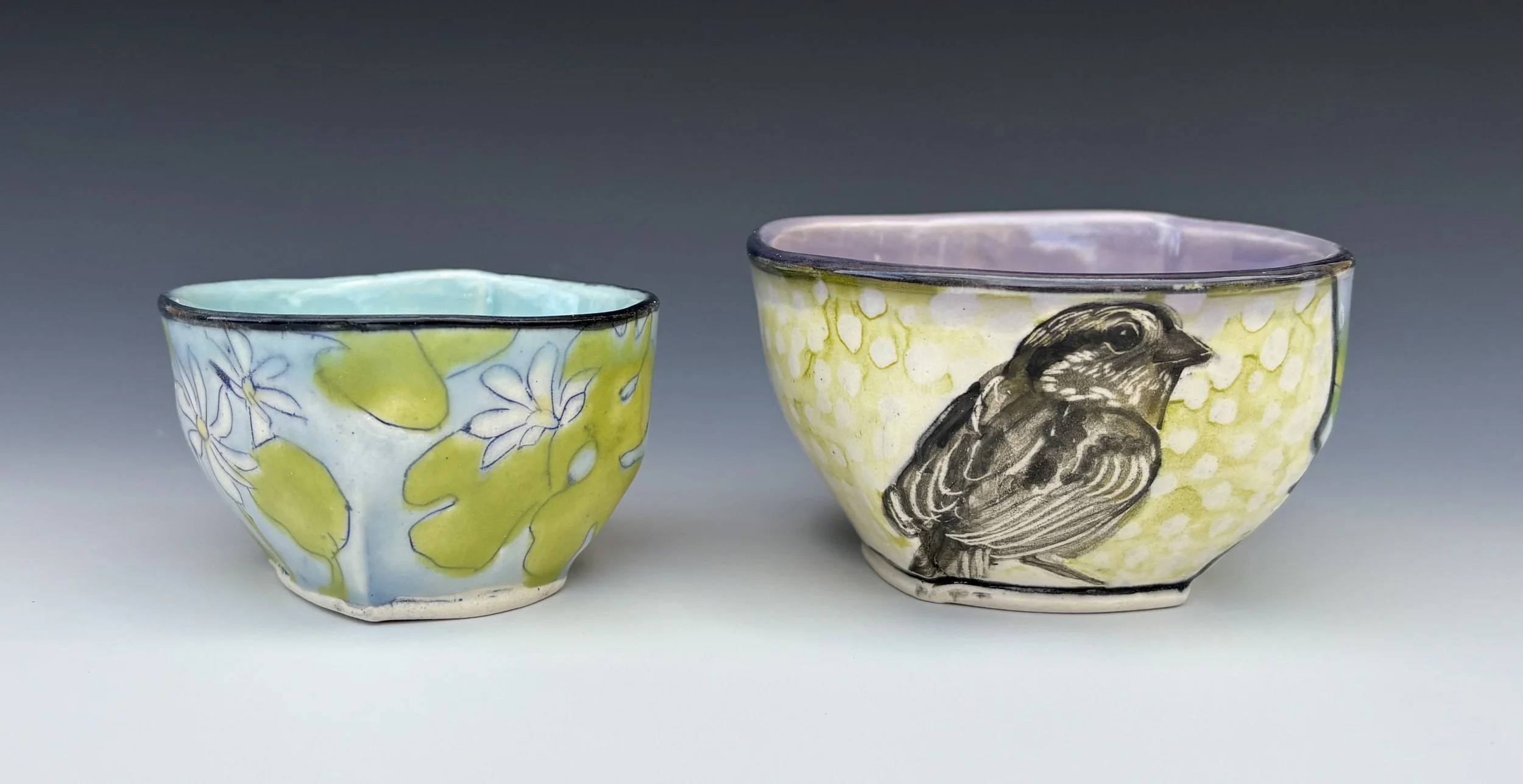
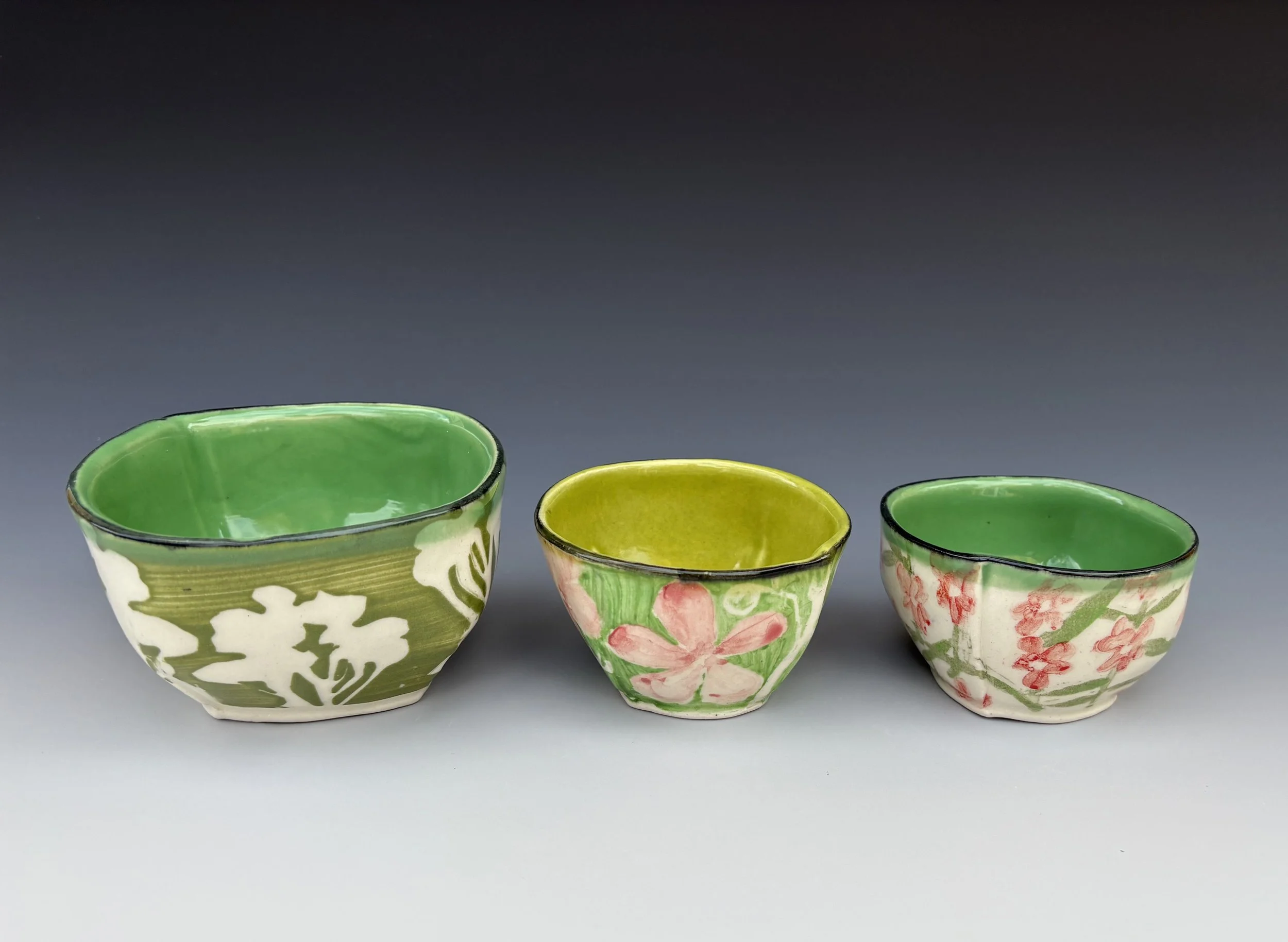
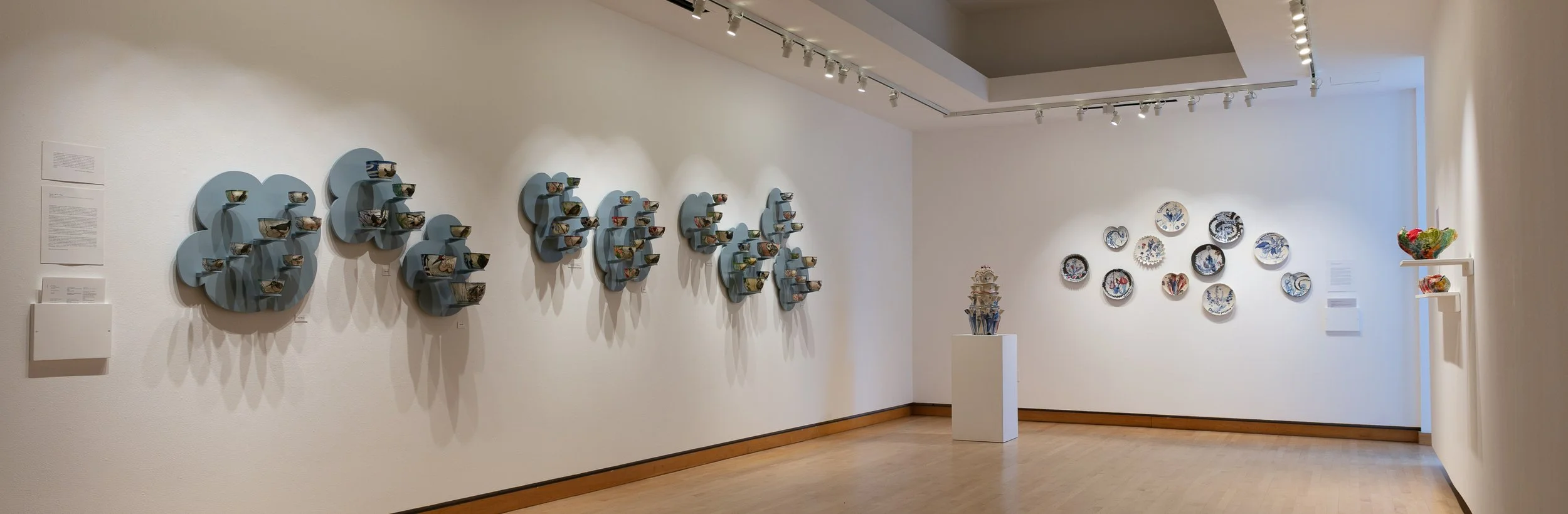
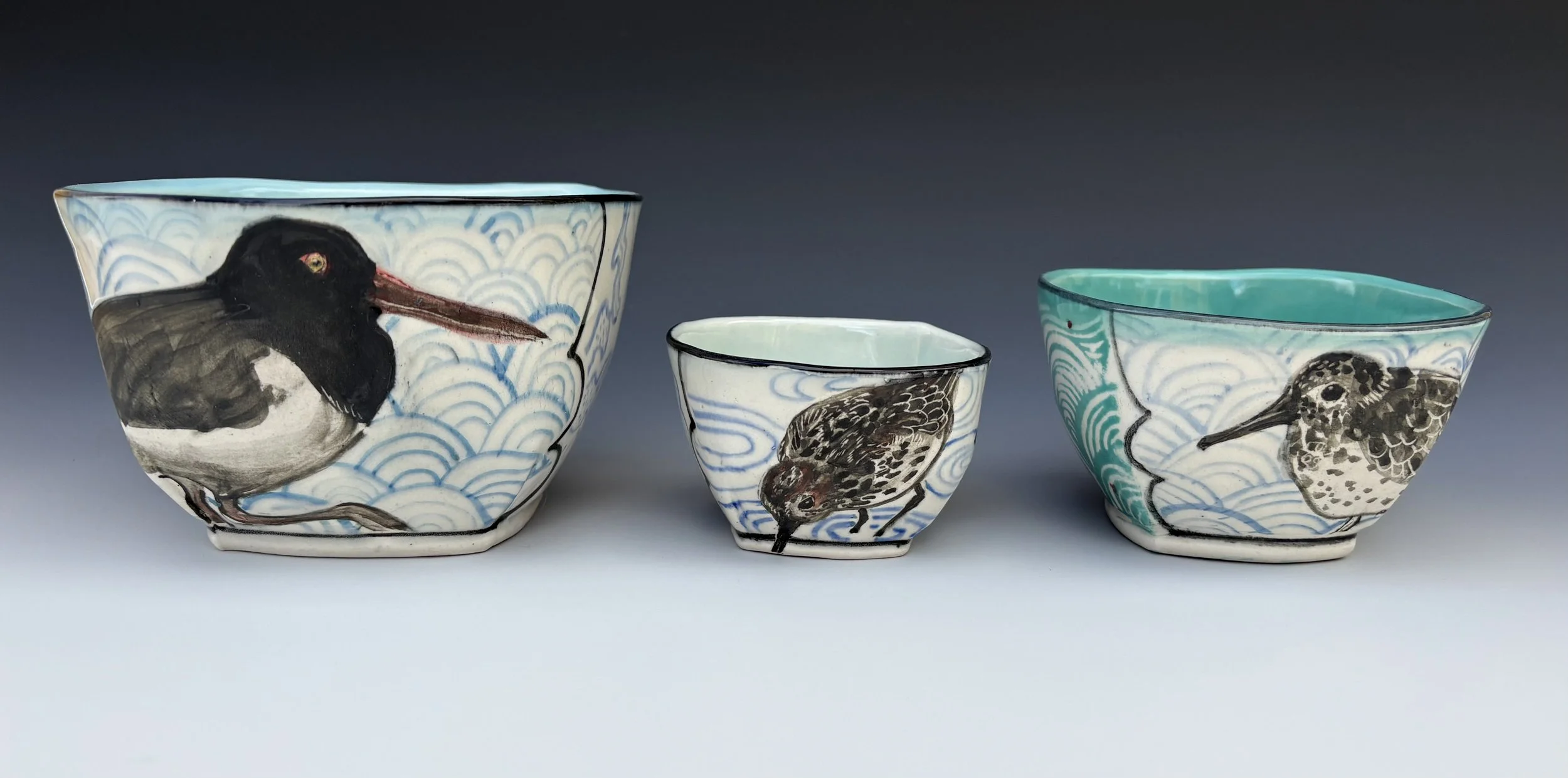
glazed white stoneware fired to cone 6 in oxidation, painted and printed with underglaze stains, inlaid with colored slips; Baltic birch plywood, ash, enamel; 2025
It’s impossible to consider the plight of birds without contemplating migration. While some species spend their lives within a small area, most birds follow the seasons to summer in a breeding ground, and winter in another part of the world. As they migrate, they encounter myriad challenges: the bright lights of the city confound a navigation system evolved for starlight. This installation of birds and clouds echoes the complex interactions of the natural and human-made world.
Bird migrations follow the form of continents, and tend to move North-South. Human ideas move in all directions, but since the 1500s have predominantly moved East-West, following the world’s oceans as maritime exploration expanded. We can trace the movement of human ideas through the evolutions of patterns as they move around the globe. Follow the shifting interpretations of the floral motif of an Indian printed cotton carried from southeast Asia to France, where it transforms into an embroidered waistcoat, to America where it becomes a wallpaper motif. When I first began to make nesting sets of bird bowls, I thought about the intersection of human and bird migration, and how the patterns I drew would have intersected the birds as each crossed oceans and continents.
In this interpretation of the bird bowl series, those years of pattern design play a role, but here the focus of the pattern is to represent the place in which each bird lives. I have divided the bowls into biomes, each represented on its own cloud shelf: Sea Shore, Ocean, Marsh, Grassy Open Woodlands, Forest, Montane/Alpine, Arctic Tundra, Grasslands and Arid Lands.
Many of the birds, and some of the plants shown in this piece are endangered. The causes of species vulnerability are many, and include habitat loss and degradation, predation, interruption of migratory systems, climate change. Each set of birds and plants decorating each bowl are intimately connected to each other in the environment where both live. I have tried to represent some of the complexity of species interconnectedness through the variety of plants that might occur in these disparate climatic zones. As Robin Wall Kimmerer notes in her description of the murrelet, the systems that maintain the health of a species are complex and often mysterious. Without the key plant species in their environments, a bird can fail to thrive.
What else is lost if we lose these birds?